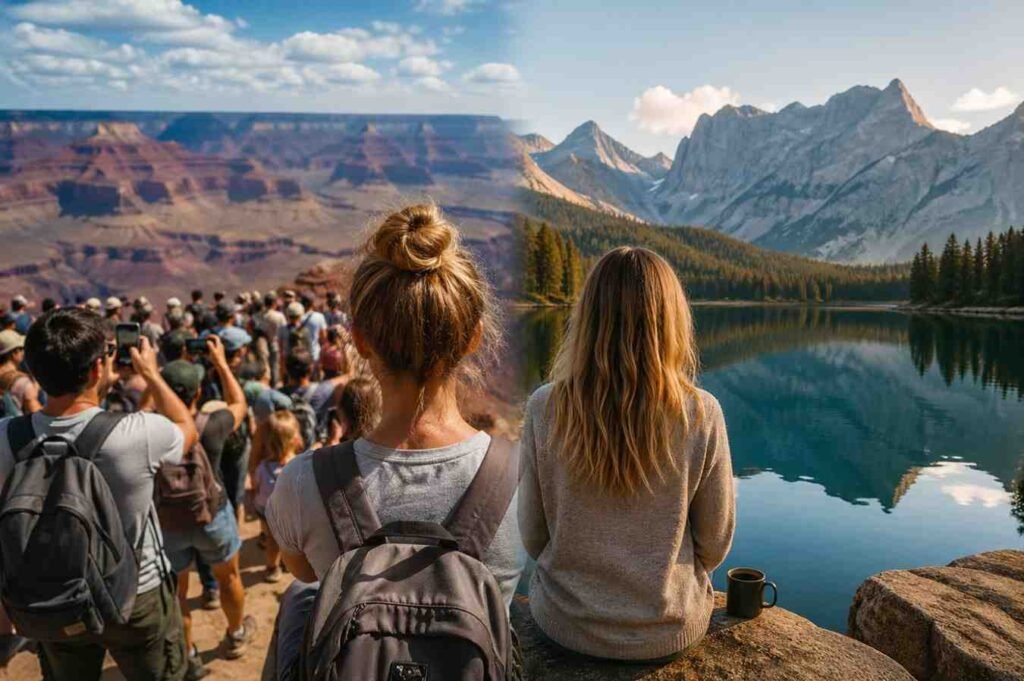
A lot of people think that more travel automatically means better travel. More cities, more landmarks, more plans packed into every day. It looks exciting in photos, but in real life, it can leave you feeling drained before the trip is even over.
I learned this the hard way. I’ve done those packed itineraries where every hour is scheduled, every meal is rushed, and every attraction feels more like a task than an experience. You come home with hundreds of pictures and somehow still feel like you missed the place entirely. That’s when a peaceful travel lifestyle starts to make sense.
The Problem With Constant Busy Travel
Busy travel often feels productive in the moment. You’re “making the most” of your time, checking famous spots off your list, and squeezing value out of every day.
But there’s a hidden cost.
Constant movement creates mental and physical exhaustion. You’re always thinking about the next thing, where to go, what time to leave, how long the line is, and where to eat next. Instead of enjoying the trip, you’re managing it.
That constant planning creates decision fatigue. Even fun decisions become tiring when they happen all day long. Over time, travel starts to feel like work.
Depth Feels Better Than Speed
One of the biggest shifts in a peaceful travel lifestyle is choosing depth over breadth.
Instead of trying to “see everything,” you experience more by doing less.
Staying longer in one place changes the entire feel of a trip. You notice things that rushed travelers miss, the way a neighborhood wakes up in the morning, the quiet corners of a local café, the routines of people who actually live there.
Those small moments create stronger memories than rushing through ten attractions in one day.
A peaceful trip lets you connect emotionally with a place instead of just documenting it.
You Eliminate Decision Fatigue

People underestimate how mentally exhausting travel can be.
Every day of a packed trip comes with endless decisions:
- Which route is faster?
- What attraction should come next?
- Is there enough time for lunch?
- What if traffic delays everything?
A peaceful travel lifestyle removes much of this pressure.
With fewer plans and more open time, your mind gets to rest. You stop obsessing over logistics and start enjoying where you are.
This is also where smart planning helps. Following practical bed and breakfast travel tips can simplify your stay by choosing quieter accommodations in calmer areas, reducing stress from the start.
The less your brain has to “manage,” the more restorative travel becomes.
The Best Moments Are Usually Unplanned
Some of the best travel memories aren’t booked months in advance.
They happen when there’s room for spontaneity.
You stumble into a local street performance. You find a hidden bookstore. You spend an hour talking to a café owner who tells you where the locals actually go.
None of those moments happen when every hour is scheduled.
Busy travel leaves no margin for surprise.
Peaceful travel creates space for those unexpected experiences that make a trip feel personal and real.
Sustainable Travel Feels Better Long-Term

Even exciting travel can cause burnout.
Constant flights, early alarms, long drives, and nonstop movement take a toll. Eventually, you stop enjoying the experience because you’re too tired to appreciate it.
A peaceful travel lifestyle is more sustainable because it treats travel like a rhythm, not a sprint.
You move more slowly. You rest more. You travel in a way you can actually maintain without feeling exhausted.
This matters whether you travel occasionally or often.
The goal isn’t to “survive” the trip.
The goal is to enjoy it fully.
You Feel Less Like a Tourist and More Like You Belong
Rushed travelers often experience destinations from the outside.
They see the landmarks, take the photos, and leave.
Slower travelers start to feel part of the place.
You find the grocery store locals use. You learn the neighborhood shortcuts. You settle into the local pace.
Maybe you take long evening walks. Maybe you sit in a quiet park every morning. Maybe you adjust your day around the local culture instead of forcing your own routine.
That kind of temporary belonging feels more meaningful than just visiting.
It creates a stronger emotional connection and a calmer experience overall.
A Peaceful Travel Lifestyle Supports Mental Wellness

Travel should not leave you more stressed than when you started.
A slower, calmer pace helps reduce anxiety and mental overload.
You’re not constantly racing the clock.
You’re not trying to maximize every second.
You’re giving yourself permission to rest, explore naturally, and be present.
That shift often feels healthier than people expect.
In many ways, peaceful travel becomes less about the destination and more about how you feel while experiencing it.
FAQs: Why a Peaceful Travel Lifestyle Feels Better Than Constant Busy Travel
1. What is a peaceful travel lifestyle?
A peaceful travel lifestyle focuses on slower, more intentional travel experiences instead of packed itineraries and rushed sightseeing.
2. Is slow travel better than busy travel?
For many people, yes. Slow travel reduces stress, allows deeper experiences, and feels more restorative.
3. How can I travel without feeling exhausted?
Plan fewer activities, stay longer in one place, prioritize rest, and leave room for spontaneity.
4. Why do I feel tired after traveling?
Busy schedules, constant movement, decision fatigue, and lack of rest can make travel physically and mentally draining.
Final Thoughts
A peaceful travel lifestyle feels better because it gives you what most vacations are supposed to offer in the first place: rest, clarity, and meaningful experiences. You stop chasing moments and start living them. You trade packed schedules for presence, stress for calm, and speed for depth.
In the end, the most memorable trips are rarely the busiest ones. They’re the ones where you felt something real, moved at your own pace, and came home feeling better than when you left.